
Dedicated to helping you succeed

Starting a business is exciting, but there are a lot of important decisions to make before you get started. Choosing the right business structure, understanding your tax obligations, estimating your start-up costs, and setting up your accounting system properly can all have a significant impact on your business down the road.
At NBG Chartered Professional Accountant, we help entrepreneurs and new business owners navigate the financial side of starting a business. Our business startup planning services provide practical guidance to help you make informed decisions, establish a strong financial foundation, and plan for the future.
We can also provide ongoing support and advice as your business grows and changes. With our extensive experience and knowledge, we can help make sure that your business start-up is set up for success.
Our business startup planning services include, but are not limited to:
Ready to start your business? Contact NBG CPA to schedule a consultation and discuss your business start-up plans.
Business startup planning gives you an opportunity to think through your financial, tax, and operational decisions before you begin. From choosing the right business structure to understanding your start-up costs and tax obligations, the decisions you make at the beginning can have a lasting impact on your business. Some of the questions you should ask before starting any business are:
The right business structure depends on your business, your income, your level of risk, and your long-term plans. You may operate as a sole proprietor, partnership, or corporation, and each option comes with different tax and legal considerations.
For some business owners, incorporating may provide advantages as the business grows. For others, starting as a sole proprietorship may make more sense. It is important to consider both your current situation and where you expect the business to be in the future before deciding.
Before getting started, it is important to understand both your initial start-up costs and your ongoing expenses. Equipment, inventory, rent, insurance, software, professional fees, marketing, and employee costs can add up quickly.
Creating a realistic start-up budget can help you determine how much money you need to get started and how much working capital you should have available while the business gets established.
Tax obligations can vary depending on how your business is structured and what your business does. You may need to consider GST/HST registration, payroll accounts, corporate income tax, and other CRA requirements.
Understanding your tax obligations early can help you avoid missed registrations, unexpected tax bills, and penalties. The CRA’s guide to setting up your business is also a useful resource for understanding some of the tax considerations involved in starting a business.
Having sales does not necessarily mean you will always have cash available to pay your bills. New businesses often have expenses that need to be paid before customers pay their invoices.
A cash flow projection can help you see when money is expected to come in and when major expenses will need to be paid. This can help you identify potential cash flow gaps and determine how much working capital your business may need.
A good business plan gives you a clearer picture of where you want your business to go and how you plan to get there. It can include your business goals, target customers, products or services, expected revenue, expenses, financing needs, and plans for growth.
Your business plan does not have to be complicated. The goal is to have a practical plan that helps you make decisions and measure your progress as your business develops.
It is worth thinking beyond the first year. Do you want to build a business that provides you with a full-time income? Are you planning to hire employees and expand? Do you eventually want to sell the business or pass it on to the next generation?
Your long-term goals can influence decisions you make today, including your business structure, accounting system, tax planning, and financing strategy.
Starting a business does not mean you need to have all the answers yourself. An accountant can help you work through the financial and tax decisions that come with starting a business and provide guidance as part of your business startup planning.
At NBG CPA, we work with entrepreneurs to help them understand the financial side of starting a business. Depending on your needs, we can help you:
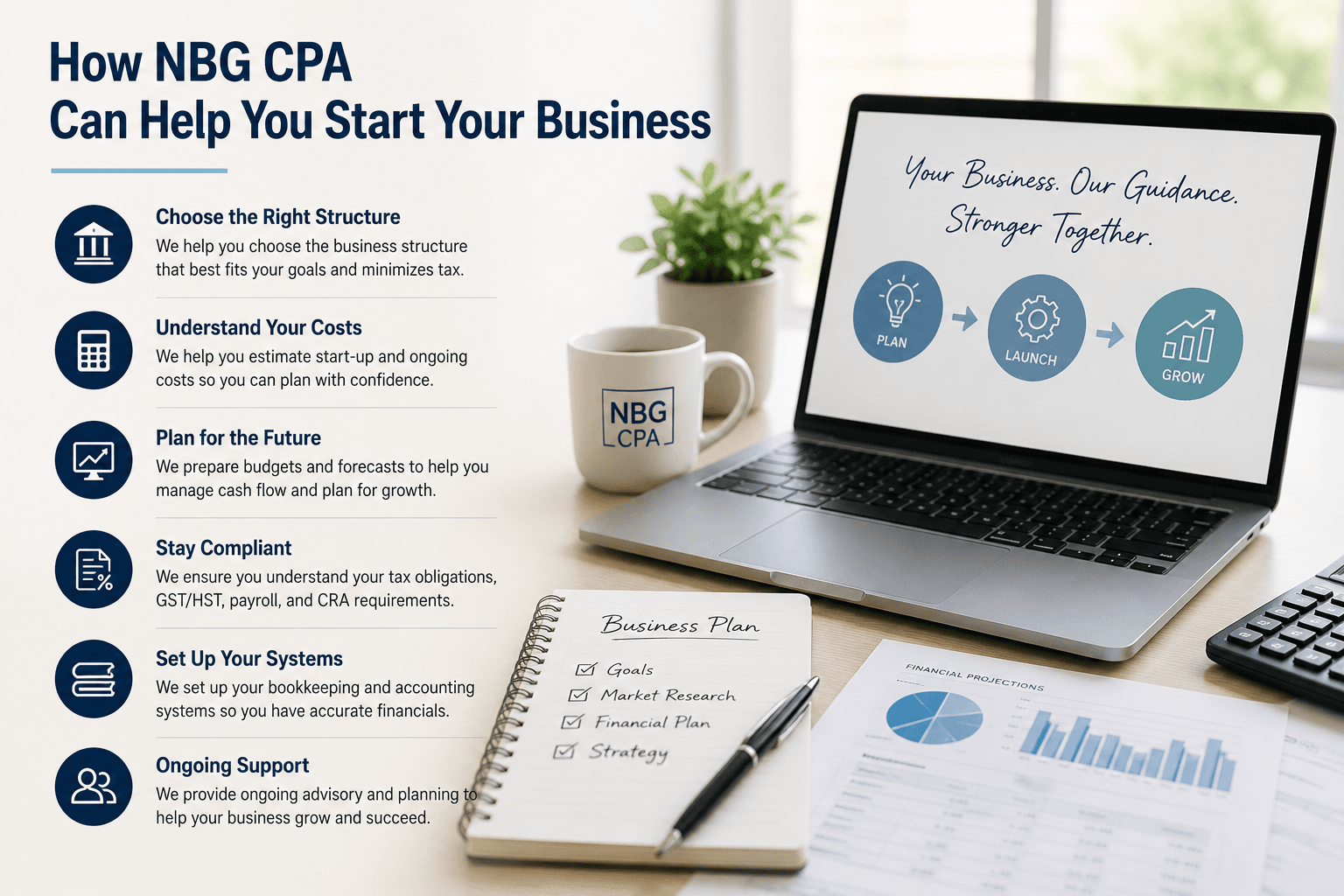
Getting professional advice early can help you avoid common mistakes and give you greater confidence in the decisions you make as a new business owner. At NBG CPA, we work closely with entrepreneurs and incorporated businesses across Hamilton and Ontario by providing practical accounting, tax, and advisory support tailored to each business's circumstances and long-term objectives. Our business startup planning services are designed to help you understand the financial side of starting a business and create a plan for moving forward.
Before launching your business, working through the following business startup planning checklist can help you identify important financial, tax, and operational considerations.
Contact us today to learn more about our business startup planning services and how we can help your business.
You do not have to hire an accountant before starting a business, but getting professional advice early can help you make better decisions about your business structure, taxes, bookkeeping, financing, and financial planning. Addressing these areas before you begin operating can also help you avoid problems later.
Not necessarily. Whether incorporation makes sense depends on your business activities, income, risk, growth plans, and tax considerations. Some businesses may benefit from incorporating early, while others may be better suited to another structure initially. A professional review can help determine whether incorporation makes sense for your circumstances.
GST/HST registration requirements depend on your taxable revenues and other circumstances. The CRA provides specific rules regarding when registration is required and when a business may choose to register voluntarily. If you are unsure whether GST/HST registration applies to your business, it is a good idea to review your situation before you begin charging customers.
The CRA's current guidance also explains the Business Number and CRA program accounts that businesses may need, including GST/HST and payroll accounts. Business number and CRA program accounts